

Can A Registered Nurse Become A Medi-cal Provider
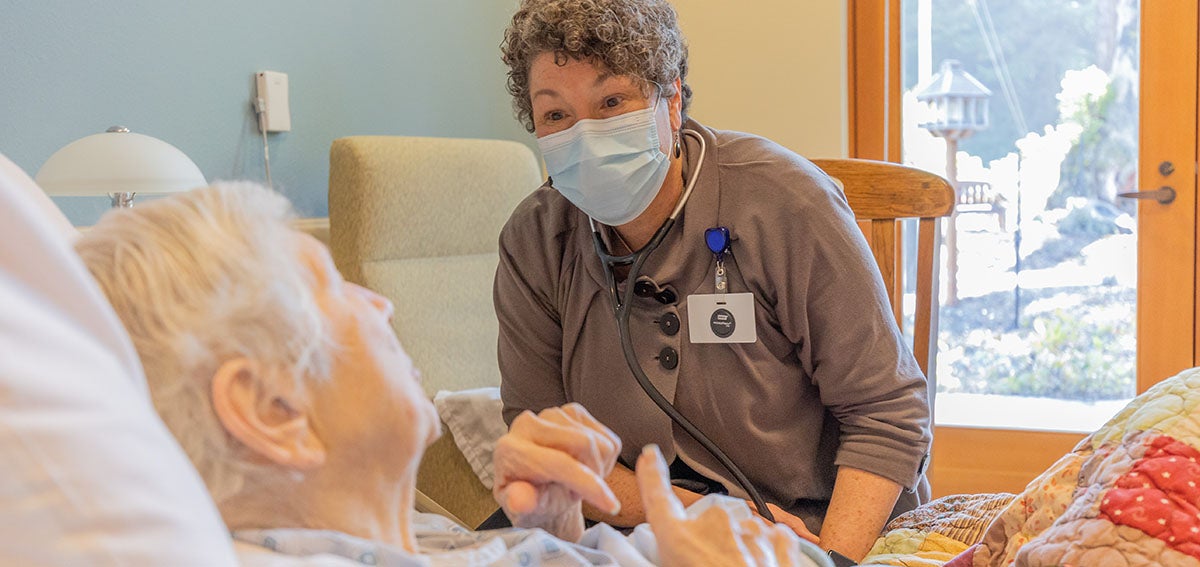
When a woman recently chosen the Priority Care Center dispensary in Eureka, California, because she was struggling with depression and suicidal thoughts, nurse practitioner Karen Ayers knew the patient would need more than the standard xv-minute primary care slot. During an hour-long appointment, the patient, who was in her sixties, cried equally she confided that she was eating fast nutrient instead of cooking and spending days in bed. She told Ayers that she didn't deserve to be depressed because she had nutrient, shelter, and a loving hubby.
Based on the patient'southward history, Ayers suspected alcohol use was exacerbating the woman'south chronic low, and the patient'due south daughter confirmed that suspicion. Ayers, who recently completed a psychiatric and mental health nurse practitioner program, worked with the woman and the daughter to create a plan to taper the booze use, switch to a different antidepressant, and encounter one of the clinic's health coaches for help in irresolute her daily routines. The adult female soon stopped drinking alcohol and having suicidal thoughts, and now she cooks, takes regular walks, and says she feels more joyful.
In contrast to other types of providers, Ayers had the flexibility to spend more than fourth dimension with the patient and offer enhanced services, including home visits and lifestyle coaching, because the goal of her clinic is to provide holistic intendance to underserved populations. When the clinic opened its doors in 2016, it started with 2 registered nurses, a medical assistant, two health coaches, and a dr. medical director. At the time, many Humboldt County residents were relieved to find a clinic that accustomed new patients.
Scarce Physicians
The steep need for main care services in the county motivated the Priority Care Middle to eventually hire three more than nurse practitioners (NPs) and programme for more. Simply electric current country regulations limit 1 physician to supervise no more than four NPs. Doctors are growing increasingly deficient in her rural customs, said Ayers, who has lived in Eureka for more 30 years and has had training in acute care, principal care, hospice care, and palliative care nursing.
"When primary care physicians retire, there is nobody to backfill," she said. "Nosotros take a revolving door of younger physicians who will work temporarily in underserved areas to gain loan repayment benefits, but they oftentimes get out one time their obligation is met." With the existing physician supervision requirements, the shortage of doctors direct restricts the team's ability to hire more NPs.
In 2020, California governor Gavin Newsom and the state legislature enacted a law (AB 890) that volition let nurse practitioners to practice without physician supervision in one case they meet certain criteria.
Enquiry has shown that the quality of primary care provided by NPs is similar to care delivered by physicians. Most states already allow NPs to practice independently, and access to chief care is greater in those states. California faces a projected shortfall of 4,100 primary care clinicians over the next 10 years, and so more than providers are needed to run across need.
Complexities of Bringing Law to Fruition
The California Board of Registered Nursing (BRN) is determining whether established NPs will be required to take a state examination in addition to the national board examination if they seek to practice without physician supervision. The BRN also needs to ascertain the minimum transition-to-practice flow, during which an NP would develop the skills and experience needed to practise without dr. supervision.
"My hope is that this dominion-making process goes every bit smoothly equally possible so that NPs tin can provide care to patients in underserved communities and other areas where it is hard to recruit providers," said Garrett Chan, PhD, NP, president and CEO of HealthImpact, an organization focused on increasing the nursing workforce.
More than 31,000 California nurse practitioners have been working with minimal supervision in clinical settings under the supervision of physicians for years, sometimes decades. These NPs fully understand the care needs and interventions required to aid a patient in their health journey, and they can safely practise without doc supervision, Chan said.
California senate president pro tempore Toni Atkins (D-San Diego) has introduced SB 1375 to analyze that NPs who have been practicing for three years or more would satisfy the transition requirement. If this bill doesn't laissez passer, the transition-to-do requirement will and then demand to be defined past BRN regulation.
Susanne Phillips, a family NP and associate dean at the University of California Irvine'south Sue & Beak Gross Schoolhouse of Nursing, is encouraged by contempo progress toward AB 890 implementation simply said she is concerned about future delays acquired by protracted legislative and regulatory processes. "The primary intent of AB 890 was to increase access to intendance for patients, but we tin can't practise that until these processes are complete," said Phillips, who has worked in leadership roles within the California Association for Nurse Practitioners and the state BRN.
Youth in Demand of Services
The current restrictions on NPs are as well affecting children in the Eureka area. In 2018, the Priority Care Center launched a middle school–based health eye in an impoverished area where children were experiencing food scarcity and fail. Students who sought care at the middle for stomachaches or headaches would often talk to the nurse practitioner about their difficult situations at home, and she connected them with therapy and social services for support. The center became a refuge for youth, just it recently reduced services because the NP retired at the same time more NPs were needed at the Priority Care Center. The squad could non hire more NPs for the school considering the supervising physician already oversees the maximum four NPs under current rules.
The master intendance provider shortage has taken a personal toll on Ayers. She oftentimes worked long hours later on clinic closing to cease care tasks for her almost 800 patients, and she said the stress began to bear on her mental wellness. These challenges were a factor in her decision to pursue her interest in caring for patients in the last stages of life. In January she left the Priority Intendance Center to take on a new part as clinical director of palliative care services at Hospice of Humboldt. "When I worked in primary intendance, I had a reputation in the customs for saying yes to patients who could not access care elsewhere, just it was exhausting," said Ayers. "Nosotros desperately need to accept the liberty to hire more nurse practitioners to serve this customs."
Reaching Undocumented Patients
The need for more primary care providers is acute in urban areas, too, and family nurse practitioner Cynthia Sanchez works with undocumented and uninsured patients in Los Angeles and Orange Counties, who ofttimes confront significant barriers when seeking medical care.
"A lot of my patients need someone who understands their social context," said Sanchez, a clinical banana professor of nursing at the University of Southern California's Dworak-Peck Schoolhouse of Social Work who has worked in gynecology and sexually transmitted illness (STD) clinics for county government agencies. "It does not practise whatever good to prescribe medicine if patients practise non understand why they are taking it or if they cannot afford the medication."
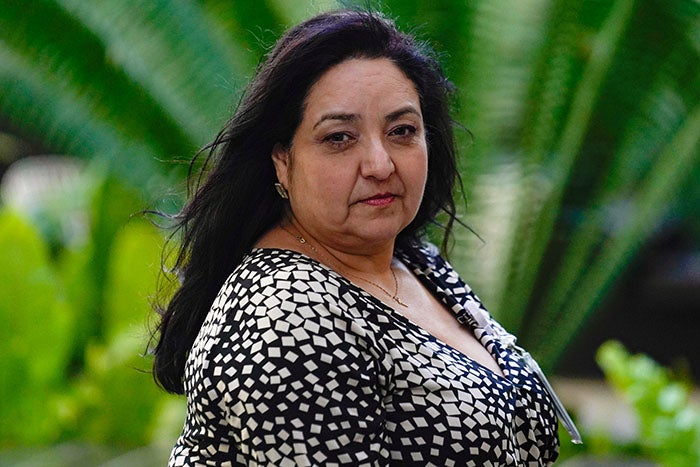
She takes fourth dimension to listen to patients who are struggling with fear, lack of pedagogy, and language barriers that inhibit their willingness to follow through with treatment recommendations. In Los Angeles, Sanchez saw a woman in her thirties who had been referred to surgery to remove a painful ovarian cyst, but the surgeons could not convince her to get forrad with the procedure. Sanchez talked to the patient and discovered that she held deep fears of having surgery and wanted to compress the cyst with Chinese herbal handling. Sanchez suggested that she try the herbs for a few weeks and schedule an ultrasound to see if the handling was working. If the cyst had grown, they could discuss the possibility of surgery.
"I took the time to listen to her reasoning and develop a plan she could have," said Sanchez. The ultrasound revealed that the cyst had grown, and Sanchez referred the patient back to the surgeon for the procedure.
Sanchez too has opportunities to reduce the stigma of STDs. When a middle-aged human being with HIV came to the clinic, he shared with Sanchez that he was agape of infecting his partner even though the antiviral medication had reduced his viral load to undetectable levels. He had been avoiding concrete intimacy with his partner for years and felt muddy and ashamed. She explained that if tests could non discover the virus that his partner was non at run a risk. Sanchez continued him with a support group to help with the psychological aspects of living with HIV. A few months later he thanked Sanchez because his mood and partner relationship had improved significantly.
For Sanchez, helping patients to amend understand their medical weather and find the help they need to thrive are the reasons she became a nurse practitioner. She knows NPs are more likely than physicians to take new Medi-Cal and uninsured patients.
"I come across many patients who idea there was no fashion to get the treatment they needed," she said. "Information technology is very rewarding to aid them, and they are often surprised to find an advocate who is willing to listen and come up with a plan that they can follow."
Heather Stringer is a freelance health and science journalist based in San Jose. She studied civil engineering at Stanford University and started her journalism career at a daily newspaper in Fremont. Heather began covering wellness care as a staff writer and editor at a nursing magazine and launched her freelancing career in 2003. Her work has been published in Scientific American, Monitor on Psychology, Cure, Proto, and Nurse.com.
More past this Author:
Retired California Physicians Render to Practice Medicine in Low-Income Communities, Nursing Leader Illuminates Strategies to Expedite Independence for Nurse Practitioners, Nurse Practitioners Continue Long Wait for Independence as Nursing Board Deliberates
Shaun Walker 
Shaun Walker is a former staff photojournalist and later also photo editor at the Times-Standard in Eureka, where he worked for nearly 25 years. He has washed freelance work for the New York Times, Los Angeles Times, San Francisco Chronicle, and other major publications, as well as for local organizations. He besides does wedding, nature, and portrait photography. He loves to travel the world, hike, and do whitewater and sea kayaking.
Harrison Loma 
Harrison Hill is a documentary lensman and filmmaker based in Los Angeles, California. His work focuses on social justice issues centered around communities of color in the U.s.a..

Can A Registered Nurse Become A Medi-cal Provider,
Source: https://www.chcf.org/blog/provider-shortage-persists-regulators-mull-implementation-nurse-practitioner-law/
Posted by: hawkinsthimeftes.blogspot.com
0 Response to "Can A Registered Nurse Become A Medi-cal Provider"
Post a Comment